Gram Sarkar Plan Raises Questions Over Local Representation and Public Consultation
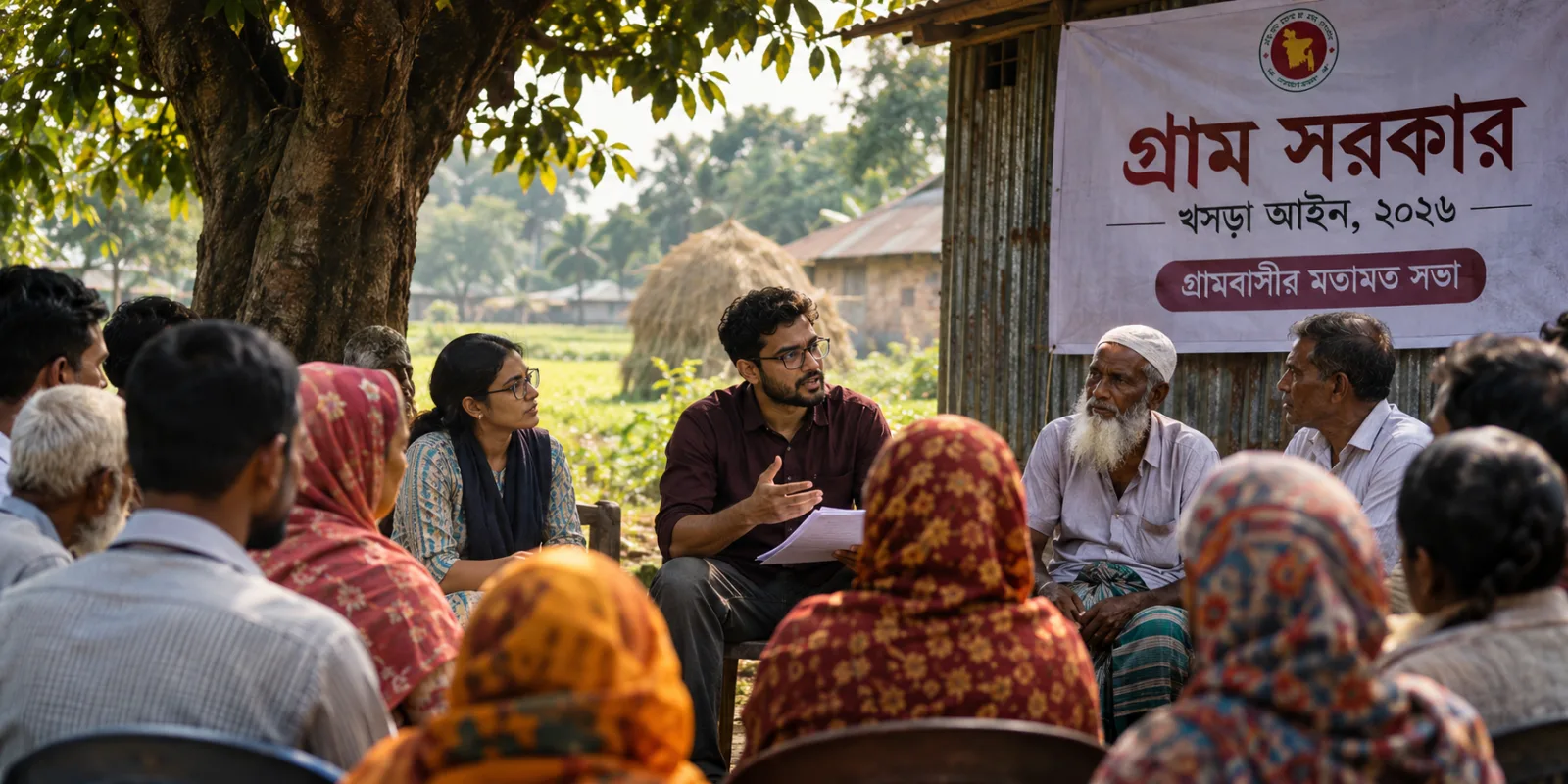
The government's proposed revival of Gram Sarkar has sparked questions about public participation, accountability and the effectiveness of existing local government institutions, as the draft Gram Sarkar Act, 2026, moves through the consultation process.
The Local Government Division has published the draft legislation and invited public feedback by November 17. However, concerns have emerged over whether publishing a PDF and accepting comments through email are sufficient ways to consult the rural communities the proposed institution is intended to serve.
The draft proposes establishing 41,112 Gram Sarkars, one in each Union Parishad ward, with 17 members in every body. Their responsibilities would include supporting rural development, agriculture, healthcare, education, social protection and monitoring public services.
While the initiative aims to strengthen grassroots participation, questions remain about whether a new institution is necessary when the Union Parishad Act, 2009, already provides for Ward Sabhas. These existing bodies are supposed to involve residents in identifying development priorities, preparing beneficiary lists, monitoring projects and reviewing public expenditure.
The proposed Gram Sarkar would have a separate legal identity, designated members and committees. It could also play a role in resolving local disputes, although village courts already operate under separate legislation.
The draft also proposes selecting 15 representatives from different occupational and community groups through a yes-or-no voting process, requiring participation from at least 10% of registered ward voters. This would create approximately 616,680 additional membership positions nationwide.
However, questions remain about nomination procedures, representation and the possibility of local influential groups dominating the selection process.
Previous research has highlighted weaknesses in existing grassroots governance. A 2026 study by the BRAC Institute of Governance and Development found that Ward Sabha meetings in Islamkati Union, Satkhira, were often conducted to meet administrative requirements, while local power relationships influenced participation.
Earlier research has also highlighted difficulties faced by citizens in accessing social safety-net benefits, with applicants sometimes relying on intermediaries to navigate documentation, verification and payment procedures.
The proposal has also raised concerns about accountability and financing. Although the draft assigns supervisory responsibilities to Upazila Nirbahi Officers and investigation and dissolution powers to Deputy Commissioners, it does not clearly establish how government departments would be required to respond to findings or complaints raised by Gram Sarkars.
Funding arrangements are another concern, as the draft does not specify a fixed financing formula or a comprehensive estimate of operating costs for more than 41,000 proposed bodies.
Bangladesh's earlier experience with local governance reforms also offers important lessons. The Gram Sarkar system introduced in 2003 was declared void by the High Court in 2005, before the legislation was repealed in 2009.
Governance experts argue that strengthening existing Ward Sabhas, improving financial autonomy and ensuring accountability could be more effective than simply creating another administrative structure.
The proposal has therefore renewed calls for wider public consultation, including village-level discussions in ordinary Bangla, involving farmers, women, community organisations and residents who are often excluded from formal government meetings.
The central question remains whether Gram Sarkar will give rural citizens genuine influence over local decisions or create another institution with responsibilities but limited authority.
Written by
News Trial Desk
Newsroom
News Trial Desk reports for News Trial, covering the stories that matter with fast, fair and factual journalism. The world, in seconds.